The connectivity dashboard had a good decade. Every IoT platform looked roughly the same: a web console with a device list, a usage chart, a thirty-tab menu of operations, an alerts panel grafted onto the side. That is about to stop being the primary interface to your IoT deployment.
Agents are going to operate IoT connectivity at a scale and cadence that humans never could. They will run continuously, in parallel, across systems, doing the work that today gets queued up for an engineer to handle on Monday morning. If your platform is not ready to be driven by an agent, it is about to be the limiting factor in your customers’ operations.
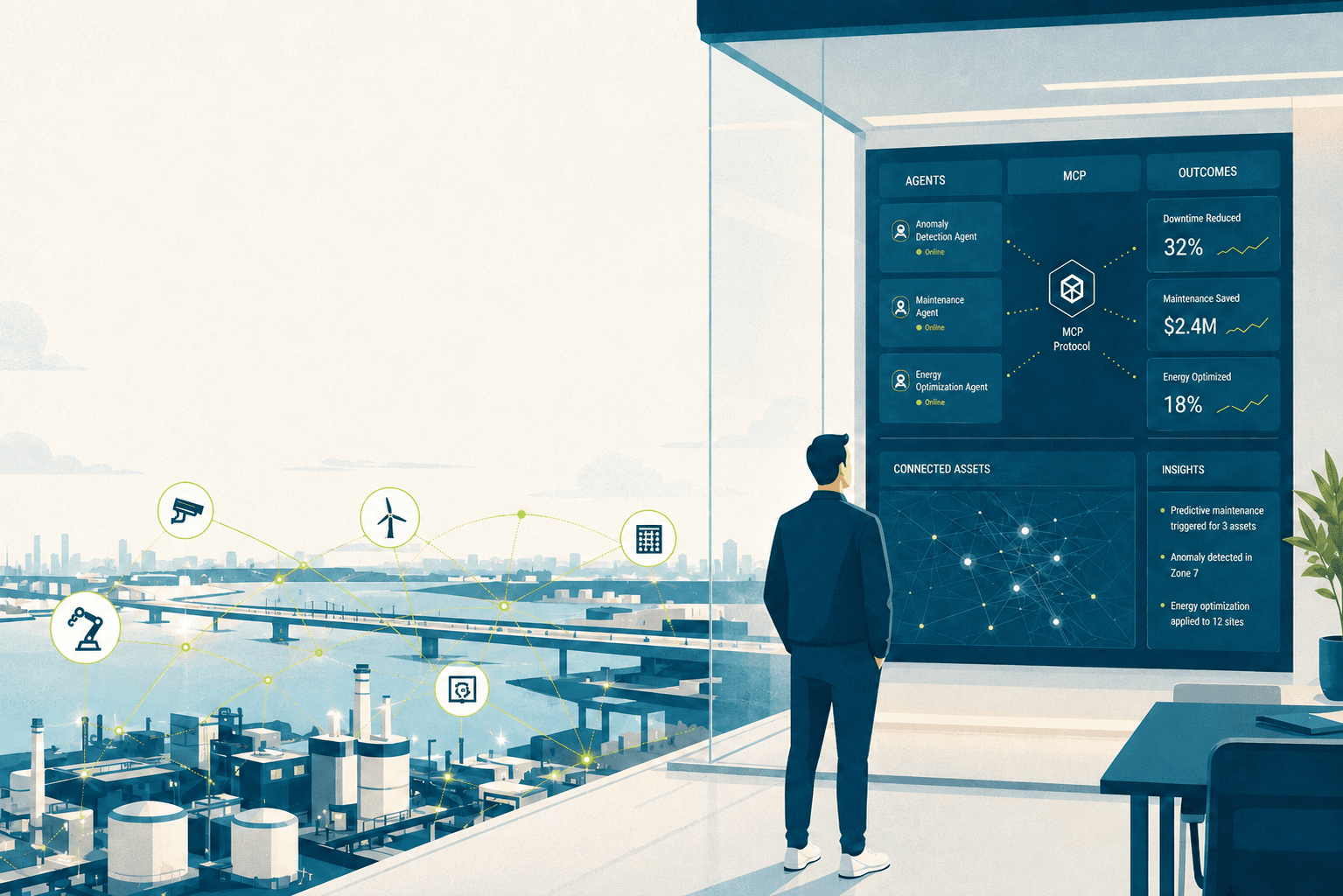
This is less a UI refresh than a rearchitecture. The platform becomes headless. The operator stops being a human clicking through tabs and starts being an agent calling tools. The console sticks around for humans who want to look something up. It stops being where the work happens.
We have been pointing Sentinel in this direction for the last year. Today the Kajeet MCP server covers devices, SIM activation, usage analytics, content filtering, GPS, SmartFailover telemetry, support cases, and identity. Any MCP-capable agent, whether that is Claude Code, Cursor, Codex, or something built in-house, connects with a single config block, discovers the live catalog at runtime, and operates against the user’s IoT deployment using the user’s own permissions. Drop the MCP server in, sign in once, the agent is online. The kajeet-sentinel CLI is the same surface for non-LLM workflows: pipe it through jq, schedule it in cron, wire it into CI. Fleet operations become a line of code like any other automation.
Once that layer is in place, the use cases stop looking like chat and start looking like workflows.
A district onboarding agent runs the activation pipeline end to end. A new router arrives from the carrier, the agent reads the VIN from the asset system, generates a test IMEI, queries carrier inventory, activates against the right rate plan and filter group, and writes the result back into the district’s MDM. Two ops people and half a Tuesday becomes ten seconds and a Slack notification.
A continuous-posture agent runs the entire fleet through a checklist every hour. Devices over 90% of cap. Devices offline during scheduled-active windows. Devices on a deprecated rate plan. Devices in the wrong filter group for their grade level. Each anomaly opens a support case with the diagnostic context already attached. Nobody runs these checks hourly today because each pass is a half hour of clicking. Compute makes the cadence almost free.
A tier-one support agent reads each new ticket the moment it arrives, queries device state via Sentinel, drafts a response with the actual numbers, and either closes the ticket or escalates with a populated reproduction. Cost per ticket falls. Time-to-first-touch falls. The hard tickets are the only ones a human sees.
A consolidation agent runs during an M&A or district merger and reconciles two Sentinel accounts: duplicate SIMs, mismatched rate plans, content-filtering gaps, suspended devices that should be migrated. What is a multi-week project today is an overnight job for an agent with the right toolset.
A pricing agent crawls the customer base for accounts approaching tier breakpoints, generates the proactive outreach, and books a follow-up on the account team’s calendar. The agent reads 50,000 device usage histories in the time a rep reads one.
None of these are speculative. They are all wired against what is live at mcp.kajeet.dev today. What changes for an enterprise IoT operator is that the connectivity platform stops being the destination and becomes the substrate. The agents go where the work is.
The next role most fleet ops teams add will not be another field engineer. It will be the person who maps the workflows, wires Sentinel to the rest of the stack, runs the evals, and tunes the prompts. That role is going to be in heavy demand for a long time.
The connectivity management GUI is not going away. It is one part of the entire platform ecosystem.